

The Evolution of Incretin Mimetics: Choosing & Dosing Your Ideal Weight Loss Peptide
The landscape of body recomposition and clinical fat loss has shifted dramatically with the emergence of single, dual, and triple incretin receptor agonists. Understanding the precise tirzepatide dosage weight loss protocols alongside first-generation Semaglutide and third-generation Retatrutide allows physique athletes and metabolic patients to maximize adipose tissue reduction while safeguarding hard-earned skeletal muscle. This comprehensive clinical guide breaks down receptor pharmacology, weekly titration schedules, vial reconstitution math, and hormone preservation strategies. Disclaimer: This content is strictly for educational and harm-reduction purposes and does not constitute medical advice.
1. Pharmacological Evolution: Single vs. Dual vs. Triple Agonists
For decades, pharmacological fat loss relied almost exclusively on central nervous system stimulants, thyroid hormone manipulation, or beta-2 adrenergic agonists. While effective at raising basal metabolic rate, traditional Fat Burners do nothing to address central satiety signaling or insulin resistance. The development of incretin mimetics revolutionized metabolic medicine by targeting gut-derived peptide hormone receptors directly in the pancreas, gastrointestinal tract, and hypothalamus.
Semaglutide: The GLP-1 Pioneer
Semaglutide (commonly known under brand names Ozempic and Wegovy) is a selective, long-acting Glucagon-Like Peptide-1 (GLP-1) receptor agonist. By mimicking endogenous GLP-1 with a modified fatty acid side chain that binds to albumin, Semaglutide achieves a half-life of approximately 7 days. It stimulates glucose-dependent insulin secretion, suppresses inappropriate glucagon release, markedly delays gastric emptying, and acts on pro-opiomelanocortin (POMC) neurons in the hypothalamus to blunten appetite and food noise.
Tirzepatide: The Dual GLP-1 + GIP Powerhouse
Tirzepatide (clinically recognized as Mounjaro and Zepbound) represents the second generation of incretin therapy. It is a synthetic 39-amino-acid linear peptide engineered as a dual agonist targeting both the GLP-1 receptor and the Glucose-Dependent Insulinotropic Polypeptide (GIP) receptor. Interestingly, Tirzepatide is an "imbalanced" or biased dual agonist: it exhibits native affinity for the GIP receptor roughly equal to endogenous GIP, while binding to the GLP-1 receptor with approximately five-fold weaker affinity than native GLP-1.
Retatrutide: The Triple Agonist Frontier
Retatrutide (LY3437943) adds a third dimension to the incretin equation by acting as a triple agonist at the GLP-1, GIP, and Glucagon (GCGR) receptors. While GLP-1 and GIP primarily drive caloric restriction and glycemic control, the addition of hepatic and adipose Glucagon receptor activation directly increases resting energy expenditure, stimulates beta-oxidation of hepatic fatty acids (rapidly clearing liver fat), and promotes thermogenesis. In Phase 2 clinical trials, Retatrutide demonstrated unprecedented mean weight reductions reaching 24.2% at 48 weeks.
Ready to Optimize Your Metabolic Cut with Lab-Verified Tirzepatide?
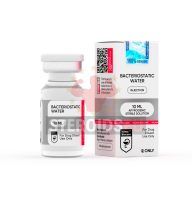
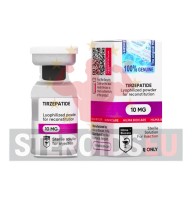
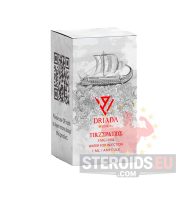
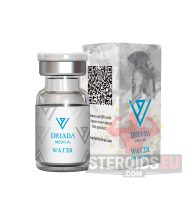
Shop pharmaceutical-grade Tirzepatide vials and bacteriostatic water from Hilma Biocare and Driada Medical. Every batch is independently verified by Janoshik Analytical for ≥99% purity and exact milligram dosing, shipped discreetly from our EU warehouses.
2. Head-to-Head Comparison: Semaglutide vs. Tirzepatide vs. Retatrutide
To choose the optimal compound for your physique or metabolic goals, it is essential to compare their pharmacokinetic profiles, receptor affinities, and clinical trial efficacy side-by-side.
| Parameter | Semaglutide | Tirzepatide | Retatrutide |
|---|---|---|---|
| Receptor Targets | GLP-1 (Single Agonist) | GLP-1 + GIP (Dual Agonist) | GLP-1 + GIP + Glucagon (Triple) |
| Elimination Half-Life | ~7 Days (165 hours) | ~5 Days (120 hours) | ~6 Days (144 hours) |
| Injection Frequency | Once Weekly (or split 2x/wk) | Once Weekly (or split every 3.5–5 days) | Once Weekly |
| Starting Dose | 0.25 mg / week | 2.5 mg / week | 1.0 mg – 2.0 mg / week |
| Maximum Clinical Dose | 2.4 mg / week | 15.0 mg / week | 8.0 mg – 12.0 mg / week |
| Mean Clinical Weight Loss | ~14.9% – 16.9% (STEP Trials) | ~20.9% – 22.5% (SURMOUNT Trials) | ~24.2% (Phase 2 Trials) |
| Direct Thermogenic Effect | Minimal (primarily caloric deficit) | Moderate (GIP lipid mobilization) | High (Glucagon hepatic beta-oxidation) |
| GI Side Effect Severity | Moderate to High at peak doses | Low to Moderate (GIP anti-emetic effect) | Moderate (plus mild resting HR increase) |
3. Complete Tirzepatide Dosage Weight Loss & Titration Protocols
Whether you are utilizing Semaglutide, Tirzepatide, or Retatrutide, receptor desensitization and gastrointestinal adaptation dictate that you must never start at a maximum dose. Slow, methodical titration over 4-week blocks allows the vagus nerve and enteric nervous system to adapt to delayed gastric emptying.
Clinical vs. Physique Titration Philosophy
In standard clinical trials (such as SURMOUNT-1), patients were automatically escalated every 4 weeks until reaching their assigned target dose (5 mg, 10 mg, or 15 mg). However, in sports pharmacology and evidence-based coaching, we follow the Minimum Effective Dose (MED) principle: remain at the lowest dose that yields steady fat loss (0.5% to 1.0% of total body weight per week) and consistent appetite control. Only escalate the dose when weight loss stalls for two consecutive weeks and food noise returns.
| Titration Phase (Weeks) | Semaglutide Weekly Dose | Tirzepatide Weekly Dose | Retatrutide Weekly Dose | Clinical Objective & User Experience |
|---|---|---|---|---|
| Phase 1: Weeks 1–4 Initiation / Sensitization | 0.25 mg | 2.5 mg | 1.0 mg – 2.0 mg | Assess GI tolerance, initiate glycemic sensitization, mild reduction in snacking and binge impulses. |
| Phase 2: Weeks 5–8 Primary Therapeutic | 0.50 mg | 5.0 mg | 4.0 mg | True therapeutic onset. Noticeable gastric slowing, early satiety during meals, steady lipolysis. |
| Phase 3: Weeks 9–12 Intermediate Escalation | 1.0 mg | 7.5 mg | 6.0 mg | Ideal sweet spot for most athletic cuts. Strong appetite suppression without crushing lethargy. |
| Phase 4: Weeks 13–16 Advanced Metabolic | 1.7 mg | 10.0 mg | 8.0 mg | Deep adipose tissue mobilization. Requires strict daily protein tracking to prevent catabolism. |
| Phase 5: Weeks 17–20 High-Output Bridge | 2.0 mg (Optional) | 12.5 mg | 10.0 mg | Reserved for high-BMI individuals or severe metabolic resistance. |
| Phase 6: Week 21+ Peak Clinical Ceiling | 2.4 mg | 15.0 mg | 12.0 mg | Maximum clinical saturation. Do not exceed these weekly ceilings. |
Tailored Protocols by User Experience
- Beginner / Bodybuilding Contest Prep Cut (Tirzepatide): Most physique athletes carrying relatively low body fat (10–18%) do not need high clinical doses. Starting at 1.25 mg to 2.5 mg per week and peaking at 5.0 mg per week for an 8-to-12-week cutting phase is usually sufficient to make a severe caloric deficit effortless while allowing you to hit daily macronutrient targets.
- Intermediate / Recomposition Protocol: Begin at 2.5 mg/week for 4 weeks, transition to 5.0 mg/week for weeks 5–10, and move to 7.5 mg/week for weeks 11–16 if needed.
- Experienced / Clinical Obesity Reversal: Follow the full 4-week stepwise escalation from 2.5 mg up to 10.0 mg–15.0 mg per week over 20–24 weeks, pairing the protocol with resistance training and structured cardiovascular work.
4. Peptide Math: Reconstitution & Syringe Dosing Guide
Unlike pre-filled single-use pharmaceutical pens that lock you into rigid dose jumps, lyophilized (freeze-dried) vials such as Tirzepatide Driada (5mg/vial + water) and pre-mixed or multi-dose presentations like Tirzepatide Hilma Biocare (10mg / 2ml) give you complete flexibility to micro-dose or split weekly administrations.
Step-by-Step Reconstitution Protocol
- Gather Supplies: You will need your lyophilized peptide vial, a sterile vial of Bacteriostatic Water (such as Bacteriostatic Water Hilma Biocare 10ml or Driada 10ml containing 0.9% benzyl alcohol), alcohol swabs, and standard U-100 insulin syringes (1 ml / 100 IU capacity).
- Sanitize: Pop the plastic tops off both vials and vigorously swab the rubber stoppers with 70% isopropyl alcohol. Let them air-dry for 10 seconds.
- Equalize & Inject Water: Draw your chosen volume of bacteriostatic water into the syringe. Insert the needle into the peptide vial at a 45-degree angle so the stream trickles gently down the inside glass wall—never spray directly onto the fragile peptide powder.
- Dissolve Gently: Roll the vial gently between your palms for 60 seconds until the solution is completely crystal clear. Never shake the vial, as mechanical agitation can shear peptide bonds. Store refrigerated at 2°C–8°C (36°F–46°F) at all times.
Exact Syringe Conversion Reference
Use the reference matrix below to draw your exact weekly dose on a standard U-100 Insulin Syringe (where 100 Units = 1.0 ml, and 10 Units = 0.1 ml):
- Scenario A: 5 mg Lyophilized Vial (e.g., Tirzepatide Driada 5mg) mixed with 1.0 ml (100 Units) of Bacteriostatic Water
Concentration = 5 mg per 1 ml (0.05 mg per 1 Unit)
• For a 2.5 mg dose: Draw 50 Units (0.50 ml).
• For a 5.0 mg dose: Draw 100 Units (1.00 ml — entire vial). - Scenario B: 10 mg / 2 ml Solution (e.g., Tirzepatide Hilma Biocare 10mg/2ml)
Concentration = 5 mg per 1 ml (0.05 mg per 1 Unit)
• For a 1.25 mg micro-dose: Draw 25 Units (0.25 ml).
• For a 2.5 mg dose: Draw 50 Units (0.50 ml).
• For a 5.0 mg dose: Draw 100 Units (1.00 ml).
• For a 7.5 mg dose: Draw 150 Units (1.50 ml).
5. Lean Muscle Preservation & Synergistic Cutting Stacks
The single greatest clinical critique of GLP-1 and GIP therapy in medical literature is the loss of Lean Body Mass (LBM). In the landmark SURMOUNT-1 DXA substudy, roughly 25% of total weight lost by sedentary patients was lean tissue. However, this occurs because sedentary clinical patients consume tiny amounts of protein and perform zero resistance training while in a steep 1,000+ kcal daily deficit.
For physique athletes and enhanced lifters, combining a structured Steroid Cycles foundation or targeted anabolic support with Tirzepatide completely flips this ratio, allowing 95%+ of weight lost to come purely from subcutaneous and visceral adipose stores.
1. The TRT + Tirzepatide Recomp
Protocol: 125–200 mg/week of Testosterone Enanthate paired with 2.5–5.0 mg/week Tirzepatide.
Why it works: Physiological-to-high-normal androgen levels lock in nitrogen retention and prevent diet-induced hypogonadism while Tirzepatide effortlessly strips visceral fat and improves insulin sensitivity.
2. The Cosmetic Contest Cut
Protocol: TRT base + 20–40 mg/day of Anavar + 2.5–7.5 mg/week Tirzepatide.
Why it works: Oxandrolone strongly binds to androgen receptors in skeletal muscle and acts as a potent anti-catabolic glucocorticoid antagonist, imparting dry, vascular muscularity during steep GLP-1 deficits.
3. The Ultimate Lipolytic Stack
Protocol: 2–4 IU/day of HGH (Somatropin) + 5.0 mg/week Tirzepatide.
Why it works: Exogenous HGH drastically accelerates free fatty acid mobilization, skin elasticity, and connective tissue recovery, while Tirzepatide completely neutralizes the insulin resistance typically caused by Somatropin.
4. Dry Hardening Synergy
Protocol: Testosterone base + 300–400 mg/week of Primobolan + 2.5–5.0 mg/week Tirzepatide.
Why it works: Methenolone provides exceptionally clean, low-toxicity protein synthesis that thrives in a low-calorie environment without adding estrogenic water retention.
Non-Negotiable Nutritional Rules on GLP-1/GIP Therapy
- Prioritize Protein First: Because gastric emptying is slowed, fill your stomach with lean protein before touching fibrous vegetables or heavy fats. Aim for 2.0g to 2.4g of protein per kilogram of lean body weight daily. Utilize whey isolate shakes if solid food volume feels overwhelming.
- Resistance Training Stimulus: Perform progressive overload resistance training 3 to 5 days per week to provide the mechanical tension signal required to retain muscle fibers.
6. Required Bloodwork, Side Effects & Post-Diet Transition
Responsible pharmacological optimization requires baseline and mid-protocol laboratory monitoring. Even though incretin mimetics generally improve cardiometabolic markers, rapid weight loss and delayed gastrointestinal motility necessitate specific oversight.
Essential Bloodwork Panel (Baseline & Week 12)
- Glycemic & Metabolic Panel: Fasting Glucose, Fasting Insulin, and HbA1c (to quantify improvements in insulin sensitivity and screen for hypoglycemia).
- Pancreatic & Biliary Enzymes: Serum Lipase and Amylase, along with Total Bilirubin, AST, ALT, and GGT. Rapid weight loss increases cholesterol saturation in bile, elevating the risk of gallstones (cholelithiasis) or biliary sludge.
- Renal Function & Electrolytes: Creatinine, eGFR, BUN, Sodium, Potassium, and Magnesium. Dehydration from reduced fluid intake or GI upset can strain kidney filtration.
- Lipid & Endocrine Profile: ApoB, LDL-C, HDL-C, Triglycerides, Total & Free Testosterone, Estradiol, SHBG, and Free T3/T4 (severe caloric deficits can lower active T3 thyroid conversion).
Managing Common Side Effects
- Nausea & Acid Reflux (GERD): Caused by delayed gastric emptying. Avoid high-fat, deep-fried, or heavily spiced meals within 3 hours of bedtime. Eat smaller, more frequent meals and supplement with ginger root extract or digestive enzymes.
- Constipation & Slowed Motility: Drink a minimum of 3.5–4 liters of water daily with added electrolytes. Supplement with 400–600 mg of Magnesium Citrate or Magnesium Oxide before bed and 5–10g of soluble psyllium husk fiber daily.
- Contraindications: Never use GLP-1, GIP, or Glucagon agonists if you have a personal or family history of Medullary Thyroid Carcinoma (MTC), Multiple Endocrine Neoplasia syndrome type 2 (MEN 2), or a history of acute pancreatitis.
Post-Cycle Therapy (PCT) & Reverse Dieting
Because Semaglutide, Tirzepatide, and Retatrutide are non-steroidal peptide hormones, they do not directly suppress the Hypothalamic-Pituitary-Testicular Axis (HPTA) when used solo. However, if you stacked Tirzepatide alongside GLP-1 & research peptides during your cutting phase, you must execute a proper Post Cycle Therapy (PCT) protocol using SERMs such as Clomid or Tamoxifen once the steroid esters clear to restore endogenous luteinizing hormone and testosterone production.
7. Frequently Asked Questions (FAQ)
What is the exact tirzepatide vs semaglutide dosage for weight loss equivalence?
Because Tirzepatide activates both GIP and GLP-1 receptors, milligram-for-milligram comparisons differ significantly. A starting dose of 0.25 mg Semaglutide roughly corresponds to 2.5 mg of Tirzepatide. A mid-tier 1.0 mg Semaglutide dose is clinically comparable to 5.0 mg of Tirzepatide, while the maximum 2.4 mg Wegovy (Semaglutide) dose delivers less average weight loss (~15–17%) than 10 mg to 15 mg of Tirzepatide (~21–22.5%). When switching from 1.0 mg–2.4 mg Semaglutide to Tirzepatide, most clinicians transition users to 5.0 mg of Tirzepatide after a 7-day washout.
What does the standard tirzepatide mounjaro dosage chart for weight loss look like?
The clinical Mounjaro/Zepbound titration schedule starts at 2.5 mg once weekly for weeks 1–4. It then increases to 5.0 mg weekly for weeks 5–8, 7.5 mg weekly for weeks 9–12, 10.0 mg weekly for weeks 13–16, 12.5 mg weekly for weeks 17–20, and reaches a maximum maintenance ceiling of 15.0 mg weekly from week 21 onward. However, you should only move up a step if your fat loss stalls for at least two weeks.
How do I use a peptide calculator for tirzepatide dosage for weight loss?
To calculate your syringe draw manually without a web calculator, divide the total milligrams in your vial by the milliliters of bacteriostatic water added to find your concentration in mg/ml. For example, a 5 mg vial mixed with 1 ml of water equals 5 mg/ml. Next, divide your desired dose (e.g., 2.5 mg) by your concentration (5 mg/ml) = 0.50 ml. Multiply by 100 to get your U-100 insulin syringe units: 0.50 x 100 = 50 Units.
Where is the best subcutaneous injection site for Tirzepatide and Semaglutide?
Incretin mimetics should be injected subcutaneously into adipose tissue using a short 29G–31G (8mm or 6mm) insulin needle. The three optimal sites are the abdomen (at least 5 cm away from the navel), the front/outer thigh, or the back of the upper arm. Rotating sites each week prevents lipohypertrophy. Anecdotally and in pharmacokinetic substudies, abdominal injections offer the fastest peak absorption, while thigh injections may slightly reduce peak nausea in sensitive individuals.
How long does a reconstituted vial of Tirzepatide last in the refrigerator?
Once reconstituted with sterile Bacteriostatic Water (containing 0.9% benzyl alcohol), a Tirzepatide vial remains fully potent and sterile for 28 to 35 days when stored in the refrigerator at 2°C–8°C (36°F–46°F) away from direct light. Unmixed lyophilized powder vials can be stored in the refrigerator for over 12–24 months or in the freezer for multi-year preservation.
Can I combine Tirzepatide and Semaglutide or Retatrutide together?
Generally, stacking two GLP-1 receptor agonists simultaneously is unnecessary and increases the risk of severe gastroparesis, dehydration, and pancreatitis because they compete for and saturate the exact same GLP-1 receptor pathways. It is far safer and more effective to select one compound (such as Tirzepatide) and titrate it to its optimal weekly dosage rather than mixing multiple incretin mimetics.
Write a comment