

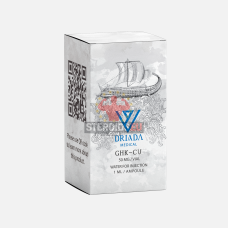
Buy Copper Peptide GHK-Cu in UK & EU – Ultimate Skin, Hair & Tissue Repair
GHK-Cu (Glycyl-L-histidyl-L-lysine copper complex) stands as one of the most thoroughly researched and powerful bioactive compounds in regenerative science and cosmetic dermatology. Naturally present in human plasma, saliva, and urine, this tripeptide-copper complex plays an indispensable role in dermal remodeling, collagen synthesis, gene expression modulation, and cellular longevity. Whether your objective is to accelerate wound healing, evaluate GHK-Cu for hair loss, or restore youthful skin architecture, choosing to buy copper peptide GHK-Cu provides access to a foundational biological signal for systemic rejuvenation.
For researchers seeking reliable GHK-Cu UK and European supply channels, GLP1PeptidesEU delivers pharmaceutical-grade lyophilized powder engineered for maximum biological activity. When you browse our GHK-Cu for sale—available in high-potency 50mg and GHK-Cu 100mg vials—every batch is backed by verified HPLC purity analytics and shipped with guaranteed customs-free delivery across the UK, Ireland, and the EU. Explore our complete catalog of peptides to design comprehensive cellular recovery protocols.
Mechanism of Action: Skin Rejuvenation, Hair Growth & Before/After Results
The tripeptide GHK possesses an exceptionally high affinity for copper(II) ions, forming the bioactive GHK-Cu complex. Copper is an essential trace element required for vital enzymatic processes, including superoxide dismutase (antioxidant defense) and lysyl oxidase (collagen cross-linking). In human plasma, endogenous GHK levels decline precipitously with age—dropping from roughly 200 ng/mL at age 20 to under 80 ng/mL by age 60. Restoring optimal peptide concentrations unlocks multifaceted regenerative pathways frequently highlighted in clinical literature and GHK-Cu before after documentation:
- Dermal Remodeling & Collagen Synthesis: GHK-Cu directly stimulates dermal fibroblasts to synthesize Type I and Type III collagen alongside elastin and glycosaminoglycans. Unlike standard cosmetic topicals or a basic GHK-Cu peptide cream, high-purity reconstituted solutions penetrate effectively to thicken the dermis, smooth deep rhytids, and tighten lax tissue.
- GHK-Cu for Hair Follicle Restoration: Extensive research and GHK-Cu hair growth Reddit community logs demonstrate that copper peptides enlarge hair follicle size, prolong the active anagen growth phase, and improve microvascular circulation in the scalp. Utilizing GHK-Cu for hair helps counteract follicle miniaturization and supports dense, resilient hair shafts.
- Broad-Spectrum Gene Modulation: Genomic profiling reveals that GHK-Cu resets the expression of over 4,000 human genes toward a healthier, younger phenotype—upregulating DNA repair and antioxidant genes while suppressing pro-inflammatory cytokines such as TNF-alpha and IL-6.
- Synergistic Cellular Longevity: For comprehensive systemic anti-aging, researchers frequently pair copper peptides with telomerase activators like Epitalon to simultaneously protect chromosomal integrity and extracellular matrix health.
GHK-Cu Protocol Guidelines: Reconstitution, Injection Site & Topical Dosing
Whether you opt for a standard 50 mg vial or a concentrated GHK-Cu 100 mg format, lyophilized copper peptide powder requires sterile reconstitution prior to research application. Proper preparation preserves the fragile peptide bonds and ensures consistent dosing accuracy.
Reconstitution and Storage Best Practices
To reconstitute lyophilized powder, slowly inject sterile bacteriostatic water down the inner glass wall of the vial. Never spray the liquid directly onto the powder cake, and avoid vigorous shaking; gently swirl the vial until the deep royal-blue crystals dissolve completely into a clear, vibrant blue solution. Store reconstituted vials refrigerated between 2°C and 8°C away from direct light.
Subcutaneous vs. Topical & Transdermal Administration
When reviewing GHK-Cu injection reviews and clinical protocols, delivery methods are selected based on whether systemic or localized outcomes are desired:
- Subcutaneous Injectable Protocol: The standard GHK-Cu injections dosage ranges from 1.5 mg to 3 mg daily, administered in cycles of 30 to 60 days. The preferred GHK-Cu injection site is the subcutaneous adipose tissue of the lower abdomen (at least two inches from the navel) or the upper outer gluteal region. Because concentrated copper ions can occasionally cause localized post-injection stinging, diluting the dose with an extra 0.2–0.3 mL of bacteriostatic water in the syringe or rotating injection sites daily significantly improves comfort.
- Topical Scalp & Facial Application: For targeted GHK-Cu topical hair restoration or facial skin renewal, reconstituted peptide is blended into a hyaluronic acid base or paired with a GHK-Cu copper peptide serum with EGF (Epidermal Growth Factor) at a 1% to 2% concentration. Applying topicals immediately after microneedling vastly outperforms a standard over-the-counter GHK-Cu patch or sublingual preparation in local bioavailability.
- Accelerated Tissue & Joint Recovery Stacks: For accelerated tendon, ligament, or surgical scar healing, GHK-Cu is routinely co-administered alongside BPC-157 to combine angiogenic vessel formation with organized collagen remodeling.
Regenerative Peptide & Delivery Comparison Guide
Comparing systemic and localized regenerative compounds helps researchers structure precise protocols tailored to tissue repair, aesthetics, or recovery.
| Peptide / Modality | Primary Mechanism | Optimal Target Area | Typical Dosage & Protocol |
|---|---|---|---|
| GHK-Cu (Subcutaneous) | Systemic gene modulation, MMP regulation, collagen synthesis | Whole-body skin elasticity, connective tissue, systemic inflammation | 1.5 mg – 3.0 mg daily for 4–8 weeks |
| GHK-Cu (Topical / Scalp) | Local fibroblast activation, anagen phase extension, angiogenesis | Hair follicles (scalp thinning), facial wrinkles, localized scars | 1% – 2% solution applied once daily |
| BPC-157 | VEGFR2 upregulation, nitric oxide pathway modulation | Tendons, ligaments, gastrointestinal mucosa | 250 mcg – 500 mcg daily for 4–6 weeks |
| TB-500 | Actin upregulation, endothelial and keratinocyte migration | Skeletal muscle tears, cardiac & soft tissue flexibility | 2.0 mg – 5.0 mg weekly (divided doses) |
| Epitalon | Telomerase activation, pineal gland regulation | Cellular lifespan, circadian rhythm, DNA repair | 5 mg – 10 mg daily for 10–20 day cycles |
For advanced soft-tissue rehabilitation protocols, users also combine copper peptides with TB-500 and cellular coenzymes like NAD+ to maximize mitochondrial ATP output during structural remodeling.
Why Choose GLP1PeptidesEU When You Buy GHK-Cu Peptide?
When searching GHK-Cu where to buy or evaluating supplier discussions on GHK-Cu Reddit forums, purity and accurate copper chelation are paramount. Inferior syntheses often contain unchelated free copper or trifluoroacetic acid (TFA) impurities that cause severe irritation. When you execute a GHK-Cu buy order through GLP1PeptidesEU, you are guaranteed analytical excellence:
- Verified >98% HPLC Purity: Every 50mg and 100mg batch undergoes independent High-Performance Liquid Chromatography and Mass Spectrometry testing to verify exact peptide sequence and optimal copper(II) stoichiometric binding.
- Fast UK & EU Customs-Free Dispatch: All parcels ship from secure domestic European logistics hubs, ensuring rapid delivery to the UK, Ireland, and continental Europe without customs seizures or hidden import duties.
- Discreet, Temperature-Stable Packaging: Lyophilized vials are vacuum-sealed and packaged in plain, unbranded parcels to protect both product stability and customer privacy.
Frequently Asked Questions About GHK-Cu
What is the recommended GHK-Cu 50 mg dosage and reconstitution ratio?
To reconstitute a 50 mg vial of GHK-Cu, add 2.5 mL of bacteriostatic water slowly down the side of the vial. This yields a concentration of 20 mg per mL (or 2 mg per 10 units on a standard U-100 insulin syringe). A typical daily research dosage is 1.5 mg to 2 mg (7.5 to 10 units) injected subcutaneously once per day for 4 to 8 weeks.
How does GHK-Cu topical dosage compare to subcutaneous injections for hair growth?
Subcutaneous injections deliver systemic elevation of GHK-Cu, supporting overall dermal thickness, nail strength, and hair follicle health across the entire body. However, for targeted androgenetic alopecia or localized thinning, a 1% to 2% topical GHK-Cu solution applied directly to the scalp—especially when combined with microneedling or EGF serum—provides higher localized follicle saturation without systemic dispersion.
Why do some GHK-Cu injection reviews mention localized stinging at the injection site?
Mild, temporary stinging or warmth at the injection site is a known characteristic of copper(II) ions interacting with subcutaneous nociceptors, rather than a sign of contamination. To minimize discomfort, allow the syringe to reach room temperature before administration, inject into deeper subcutaneous fat in the upper glute or abdomen, or draw an additional 0.2 mL of bacteriostatic water into the syringe to dilute the concentration.
Is sublingual GHK-Cu or a GHK-Cu patch as effective as injectable and topical forms?
Clinical data indicates that subcutaneous injection and microneedled topical solutions offer superior bioavailability. While a GHK-Cu sublingual dosage or transdermal patch can provide mild systemic absorption, gastrointestinal and mucosal enzymes rapidly degrade unprotected tripeptides, making injectable lyophilized powder and freshly mixed topical serums the gold standard when you buy GHK-Cu peptide.